
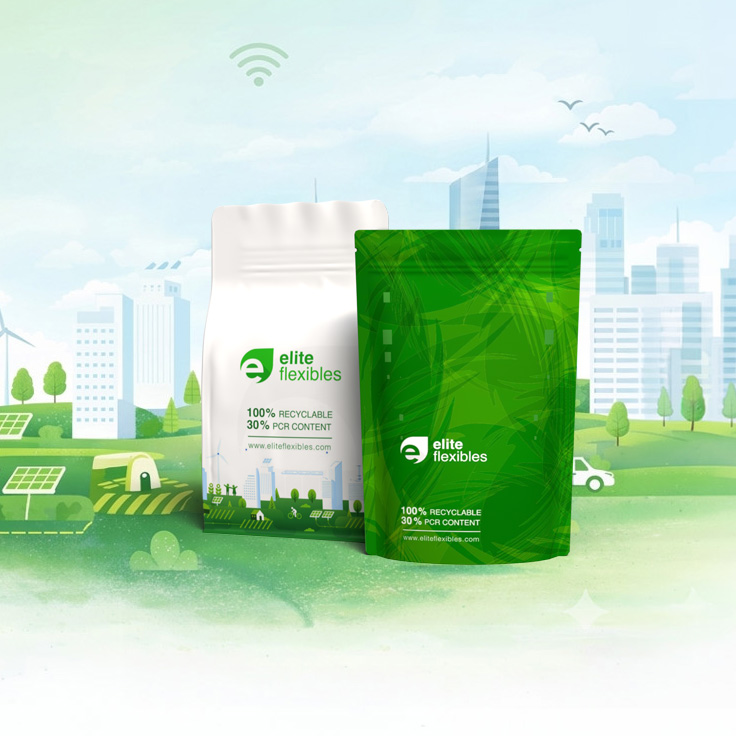
Understanding EPR Packaging Fees: What UK Businesses Need to Know
Extended Producer Responsibility (EPR) is one of the most significant changes to UK packaging legislation in decades. Designed to encourage businesses to reduce packaging waste and improve recycling rates, EPR changes how the costs of managing packaging waste are shared across the supply chain.

Extended Producer Responsibility (EPR) for Packaging
Extended Producer Responsibility (EPR) is one of the most significant changes to UK packaging legislation in decades. Designed to encourage businesses to reduce packaging waste and improve recycling rates, EPR changes how the costs of managing packaging waste are shared across the supply chain.
For many manufacturers, brand owners and retailers, the introduction of EPR means higher compliance costs and a greater focus on designing packaging that is easier to recycle.
At Elite Flexibles, we help businesses understand how these changes affect their packaging and identify opportunities to reduce both environmental impact and future compliance costs.
What is EPR?
Extended Producer Responsibility (EPR) is legislation that makes businesses responsible for the full net cost of collecting, sorting, recycling and disposing of the packaging they place onto the UK market.
Previously, local authorities covered much of these costs through council tax and government funding. Under EPR, these costs are increasingly transferred to the businesses that introduce packaging into the supply chain.
The principle is simple:
The more difficult your packaging is to recycle, the higher the potential cost of compliance.
Who Needs to Comply?
EPR applies to many UK businesses that import or supply packaged goods.
Depending on company turnover and the amount of packaging handled annually, businesses may be required to:
- Collect packaging data
- Report packaging placed onto the UK market
- Pay EPR packaging fees
- Keep detailed records
- Demonstrate compliance with UK regulations
Many manufacturers, food producers, online retailers and importers are now affected.
How are EPR Fees Calculated?
EPR fees are expected to vary depending on the type of packaging material used.
Factors likely to influence fees include:
- Material type (plastic, paper, aluminium, steel, glass etc.)
- Weight of packaging
- Ease of recycling
- Collection and sorting costs
- Recycling infrastructure available within the UK
Packaging that is difficult or impossible to recycle may attract significantly higher fees than packaging designed for established recycling streams.
This is intended to encourage companies to move towards more sustainable packaging solutions.
Why Packaging Design Matters More Than Ever
Packaging is no longer judged solely on appearance, barrier performance or cost.
Today, packaging design can also have a direct impact on future compliance costs.
Businesses should now consider:
- Material selection
- Recyclability
- Lightweighting opportunities
- Elimination of unnecessary layers
- Reduction in overall packaging weight
- Compatibility with UK recycling systems
Making these changes can help improve environmental performance while potentially reducing future EPR liabilities.
Flexible Packaging and EPR
Modern flexible packaging has evolved considerably over recent years.
Many traditional multi-material laminates are now being replaced with recyclable mono-material structures that maintain excellent product protection while improving recyclability.
Innovations include:
- Recyclable PE structures
- Recyclable PP structures
- Lightweight pouch formats
- Mono-material barrier films
- Reduced plastic packaging designs
These developments can help brands move towards more circular packaging solutions while preparing for future EPR requirements.
How Elite Flexibles Can Help
At Elite Flexibles, we work closely with brands across the food, pet food, healthcare, household and industrial sectors to develop packaging solutions that balance:
- Product protection
- Shelf life
- Sustainability
- Commercial performance
- Future legislative compliance
Whether you're launching a new product or reviewing your existing packaging portfolio, our technical team can advise on materials that support both your sustainability objectives and your long term packaging strategy.
Preparing for the Future
EPR is transforming the way businesses think about packaging.
Rather than viewing compliance as simply another cost, forward thinking companies are using it as an opportunity to redesign packaging, reduce material usage and improve recyclability.
Those who act early are likely to be better positioned as regulations continue to evolve.
Speak to Elite Flexibles
If you're reviewing your packaging in light of EPR legislation, Elite Flexibles can help you identify practical solutions that support compliance while maintaining product performance and commercial value.
Our experienced team can review your current packaging specifications and recommend recyclable or more sustainable alternatives tailored to your products and production processes.
Contact Elite Flexibles today to discuss your packaging requirements and prepare your business for the future of packaging compliance.